
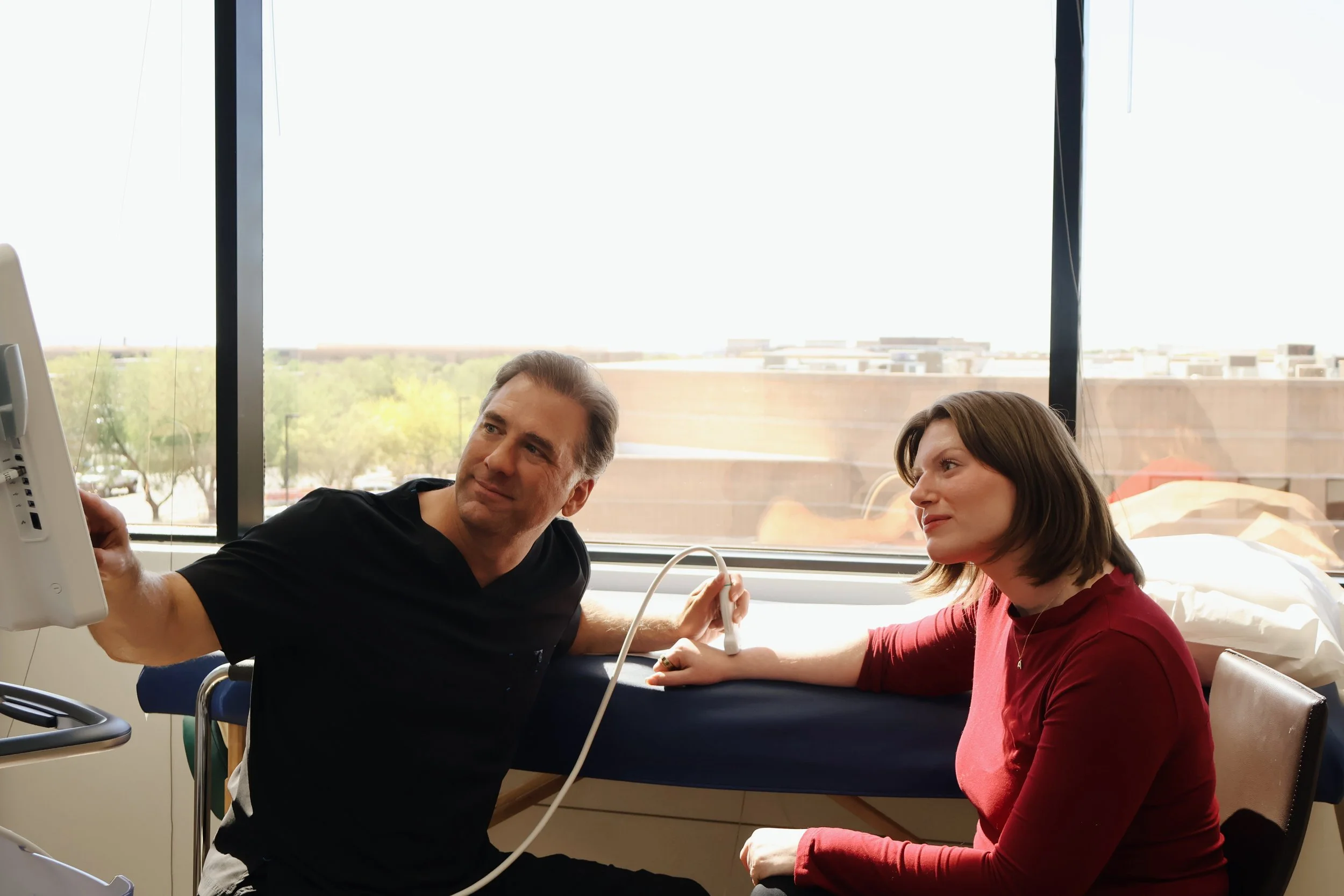
Ultrasound Guided Injections
What is Ultrasound Guided Injection Therapy?
Most injections are done blind. The provider estimates where to place the needle based on anatomical landmarks and experience. Ultrasound Guided Injection therapy takes a different approach. Using real-time imaging, we can see exactly where the needle is going, down to the tendon, ligament, or joint space that needs treatment. Nothing is left to guesswork.
At RegeneZone, ultrasound guidance is used alongside our Regenerative Injection Therapy (RIT) protocols, including Prolotherapy, PRP, and Wharton's Jelly, to make sure every injection lands precisely where it needs to for the best possible outcome. Precision isn't an added bonus here. It's the baseline.
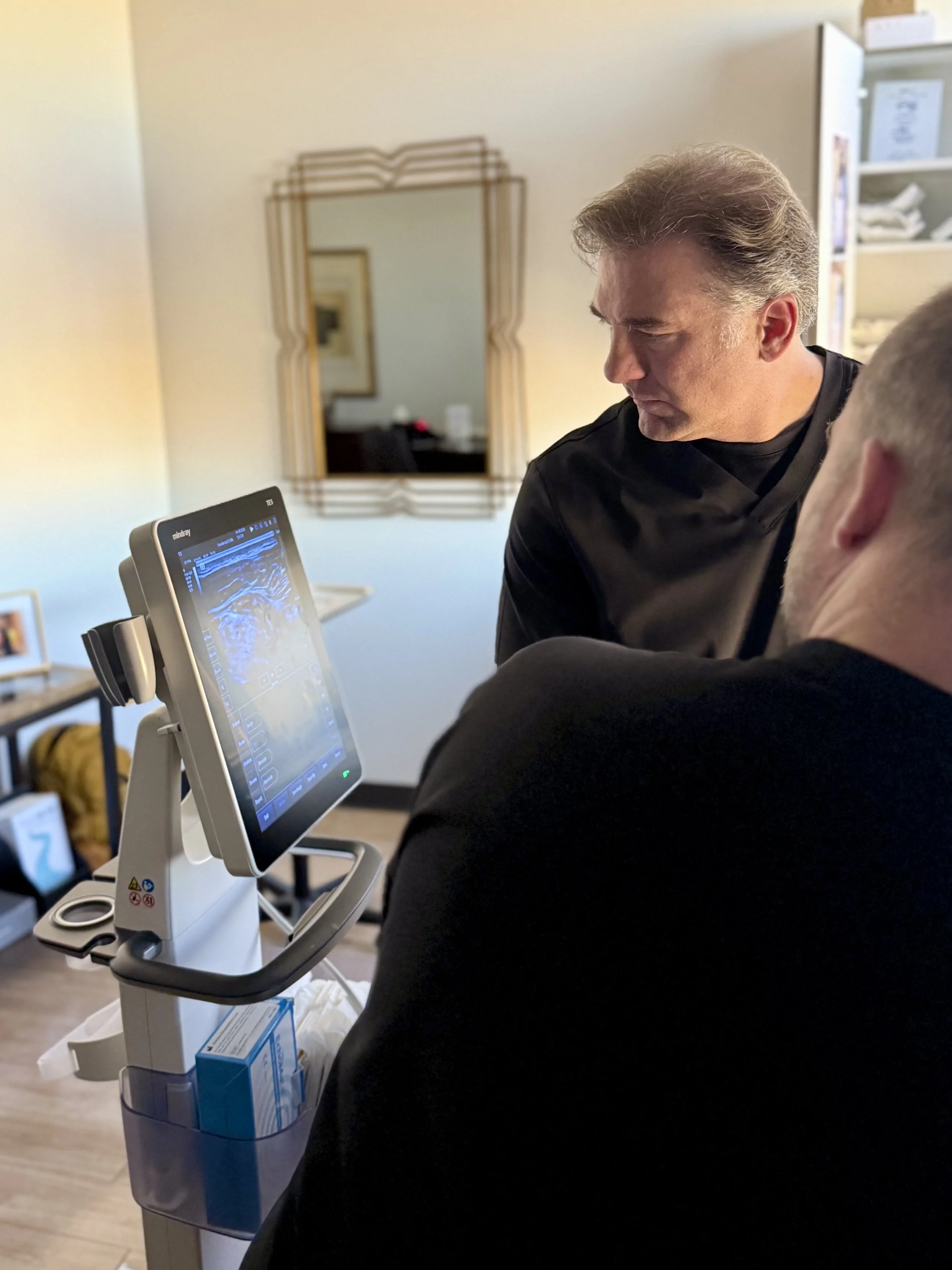
Why Ultrasound Guidance Matters
The musculoskeletal system is complex. Tendons, ligaments, bursae, nerves, and joints are often layered close together, and missing a target by even a few millimeters can mean the difference between an effective treatment and one that doesn't work. That's not a risk worth taking.
With ultrasound guidance, we can:
Visualize the exact structure being treated in real time
Confirm needle placement before any solution is injected
Avoid sensitive structures like nerves and blood vessels
Identify the true source of pain, not just the location of symptoms
Deliver regenerative solutions to the area where they will actually do work
This matters even more when regenerative therapies are involved. PRP and Wharton’s Jelly-based treatments contain growth factors and biologically active compounds that need to reach the right tissue to initiate healing. Precise placement isn't optional, it's what makes the therapy work.
What Conditions Are Helped With Ultrasound Guided Injection Therapy?
Because ultrasound guidance improves the accuracy of any injection-based treatment, it can be applied across a wide range of musculoskeletal conditions.
-
Knee pain and osteoarthritis
Shoulder pain and rotator cuff injuries
Low back and sacroiliac joint pain
Hip pain and labral tears
Elbow pain, including tennis and golfer's elbow
Achilles tendinopathy and plantar fasciitis
Wrist and hand pain
Neck pain and cervical joint dysfunction
Sciatica and nerve-related pain
Cartilage damage and joint instability
Ultrasound Guided Injections in Scottsdale & Prescott, Arizona
At RegeneZone, ultrasound guidance isn't an add-on feature, it's built into how we practice. Our board-certified naturopathic doctors have spent decades working with regenerative injection therapy, and they understand that the best treatment in the world doesn't do much if it's not delivered to the right place.
We use diagnostic ultrasound before and during treatment to build a clearer picture of what's actually going on with your pain. This means we're not just relying on how something feels from the outside, we can see the tissue, identify damage, and track how things are improving over the course of your care.
This level of precision is what separates a well-placed injection from one that works. It's also what allows us to confidently combine ultrasound guidance with our full suite of regenerative therapies (Prolotherapy, PRP, and Wharton's Jelly) knowing each one is going exactly where it needs to go.
How Ultrasound Guided Injection Therapy Works at RegeneZone
Every treatment begins with a comprehensive orthopedic evaluation. Before anything is injected, your provider will use diagnostic ultrasound to assess the affected area, identify the specific structures involved, and confirm the diagnosis. Here's what to expect during a typical treatment visit:
-
A handheld transducer is placed on the skin and produces a real-time image of the underlying tissue. This allows your provider to identify the precise target area for injection.
-
The treatment area is numbed to reduce discomfort during the procedure.
-
Using the ultrasound image as a live guide, your provider advances the needle to the exact target structure, whether that's a ligament, tendon, joint space, or bursa.
-
Once confirmed, the regenerative agent, dextrose solution, PRP, or Wharton's Jelly depending on your protocol, is injected precisely into the target tissue.
-
Your provider will walk you through what to expect in the days following treatment, including any activity modifications and how to support the healing process.
Most visits take about 30 to 60 minutes. Side effects are generally mild. Some temporary soreness, swelling, or bruising at the injection site, and most patients return to normal activities the same day. The number of visits varies by condition and by which regenerative therapy is being used, and your provider will outline an individualized plan after your evaluation.
Trust RegeneZone for Your Ultrasound Guided Injection Therapy
٭
Trust RegeneZone for Your Ultrasound Guided Injection Therapy ٭
Ultrasound guided injection therapy requires both imaging expertise and a deep understanding of musculoskeletal anatomy. Not every provider who performs injections uses ultrasound guidance, and not every provider who uses ultrasound has extensive experience with regenerative injection protocols. You want someone who is skilled in both.
Our naturopathic doctors at RegeneZone have more than 10 years of hands-on experience in regenerative injection therapy and have completed advanced training specifically in musculoskeletal ultrasound. They personally oversee and perform every injection, no assistants, no delegation. When you come in for treatment, you're working directly with someone who knows exactly what they're doing.
We also take the time to explain what we're seeing on the ultrasound, what the treatment plan is, and what results you can realistically expect. If ultrasound guided RIT isn't right for your situation, we'll tell you that, too.
Frequently Asked Questions
-
The honest answer is: it depends. Most patients tolerate treatment well, especially with a local anesthetic applied beforehand. Some areas of the body are more sensitive than others, and everyone's pain response is different. Discomfort is typically brief and mild, and most patients find it very manageable.
Maximum benefits are usually achieved after 2-5 visits, but, depending on their condition, many patients begin to experience immediate relief from some of their more severe symptoms after the first session.
-
You can, and many providers do. But studies consistently show that ultrasound guided injections are more accurate than landmark-guided ("blind") injections, particularly for smaller or deeper structures. Accuracy directly affects outcomes, especially when the injection contains a regenerative agent designed to stimulate healing. At RegeneZone, we use ultrasound guidance across our RIT protocols because we believe precision is non-negotiable.
-
The number of visits depends on your specific condition, its severity, and which regenerative therapy you're receiving. Most patients complete a series of 3 to 8 sessions, spaced several weeks apart to allow the healing process to progress. Your provider will give you a clearer picture of what to expect after your initial evaluation.
-
Most insurance companies do not cover regenerative injection therapies at this time, as they are often classified as investigational. Many of our patients use HSA or FSA funds to offset the cost. We are happy to provide you with a superbill and the necessary coding to submit a claim yourself if you'd like to seek reimbursement.
-
Yes, and often they work best that way. At RegeneZone, ultrasound guidance is used across all of our regenerative injection protocols. Depending on your condition, your provider may recommend combining Prolotherapy with PRP, or using PRP alongside Wharton's Jelly therapy, all guided by ultrasound imaging. Your individualized care plan will outline which combination makes the most sense for your specific situation.
-
Common side effects include temporary soreness, mild swelling, or bruising at the injection site. These typically resolve within a few days. You should avoid anti-inflammatory medications (NSAIDs) for at least 72 hours after treatment, as they can interfere with the healing response the injection is designed to trigger. Your provider will walk through post-treatment care instructions with you in detail.